Have an opinion. Say it loud.
You’re allowed to think something. Give your reasons, say what the other side thinks, then ask the reader what they think.
“Going to space is so overrated.”Seren, Issue 012


Real news, big opinions, interviews with actual experts, terrible fake adverts and very good puzzles. Every word is written by young reporters who meet in after-school clubs, schools and newsrooms run by The Bank of Dreams & Nightmares.
These stories come straight from our last two issues, word for word. Tap any of them to read the whole thing.
Every issue ends with classified ads, written by our reporters. None of them are real. Please do not try to buy the ants.
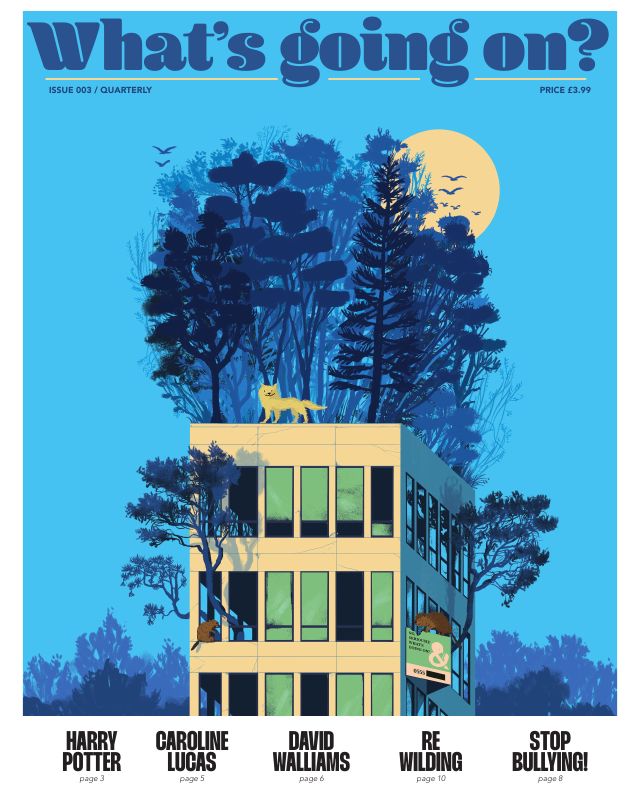
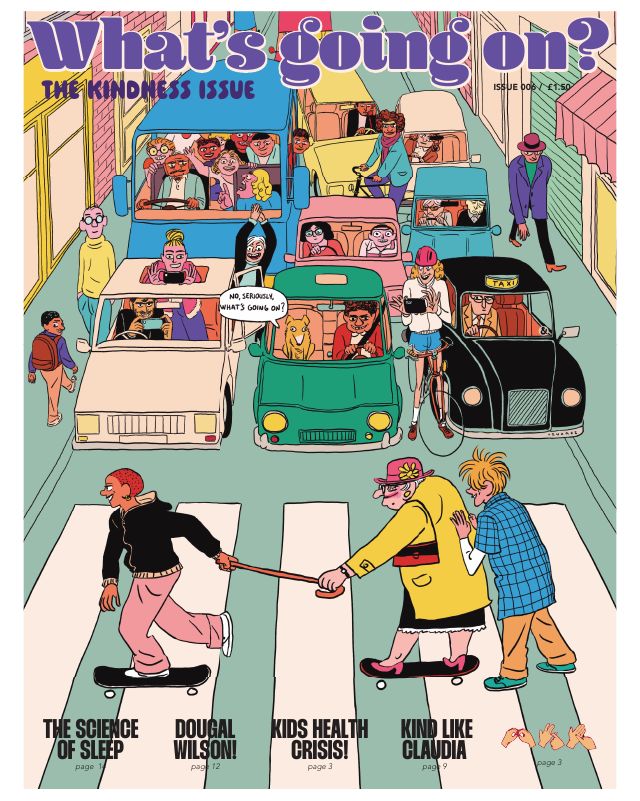
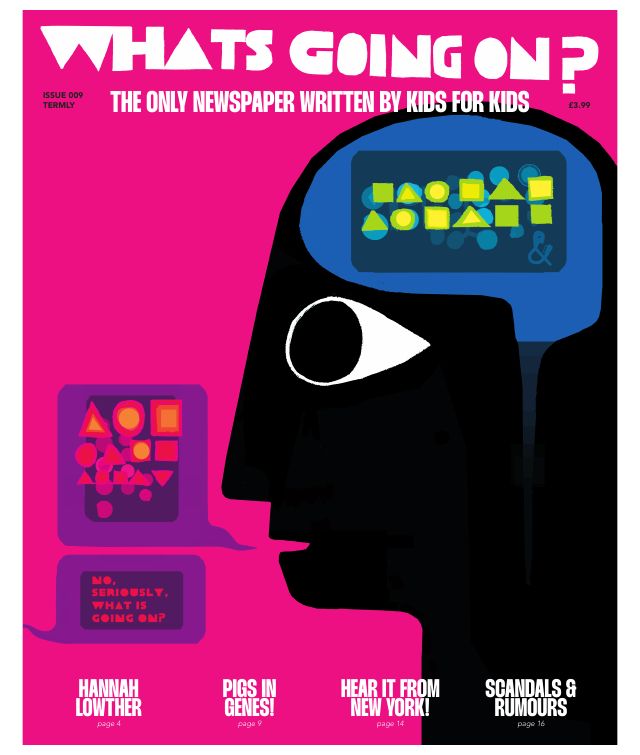
Every cover is drawn by a real illustrator. Every page inside is made by young people. Open Issue 007 or Issue 012 to flick through some pages.
Every issue has a games page. Here are four from past issues that you can play right here, no pencil needed.
Every child has something worth saying. Someone should be listening.
What’s Going On? is a real newspaper, read by people all over the world. If your article is chosen, your name goes in print next to illustrations by professional artists. Not in a class display. Not in a folder. In an actual newspaper.
You don’t need to sound like a journalist. You just need something you actually care about, and a few tricks to say it well. Here’s how.
What has made you angry, curious or surprised lately? About anything at all. If What’s Going On? went to every school in the country, and you could write anything in it, what would you write about?
Our writers have covered child slavery in the UK today, beavers coming back to British rivers, towns losing their cliffs to the sea, and what it really feels like to be bullied.
Don’t write about a giant subject. Pick one sharp, personal bit of it. Ask yourself: what do I know about this that other people might not? Who else does it affect?
Got your angle? You have if you can finish this sentence.
I’m going to write about because and what I really want to say is .
Dig up three or four solid facts or real examples. If you can, talk to someone who knows more than you: a parent, a shopkeeper, a teacher, a friend who’s been through it.
The best interview question ever: “What do you wish more people understood about this?”
Put the most important thing first. Don’t save the best for last. Then write like you talk, but smarter, in 200 to 500 words. Your voice isn’t a problem to fix. It’s the whole point.
“What if I told you there are scientists whose job is to control dreams?” Cicely’s opening, Issue 012
Get someone you trust to read it and tell you the one thing they wanted to know more about. Fix that. Then send it in. Our editorial team, the young writers from our after-school club, read every single piece and pick what goes in each issue.
Send my storyPlay the game our reporters play in the newsroom. Spin for a topic and a twist, then work out the headline.
A few more things our writers worked out the hard way. Steal them.
You’re allowed to think something. Give your reasons, say what the other side thinks, then ask the reader what they think.
“Going to space is so overrated.”Seren, Issue 012
The best stories are the ones everyone at your school whispers about and nobody writes down. Our reporters investigated the school toilets.
In fact, puns are encouraged. A piece about pudding became “The Humble Crumble”. A story about clowns became “No Fooling Around”.
News has to be true. Fake ads, agony columns and stories can be as silly as you like. Just know which one you’re writing. Nobody needs a real foot cannon.
Did you ever think to yourself …
“What’s going on?”
Take out a subscription to help find out what is actually going on. Our newspaper, created entirely by young writers, lands on your doormat once every term.
Terms and conditions: management take no responsibility for any trouble caused by readers becoming more informed, creative and interesting individuals after reading our newspapers.